Article XXV — Pandora, Sophia, and the Return to Jupiter — Anton Jayasuriya
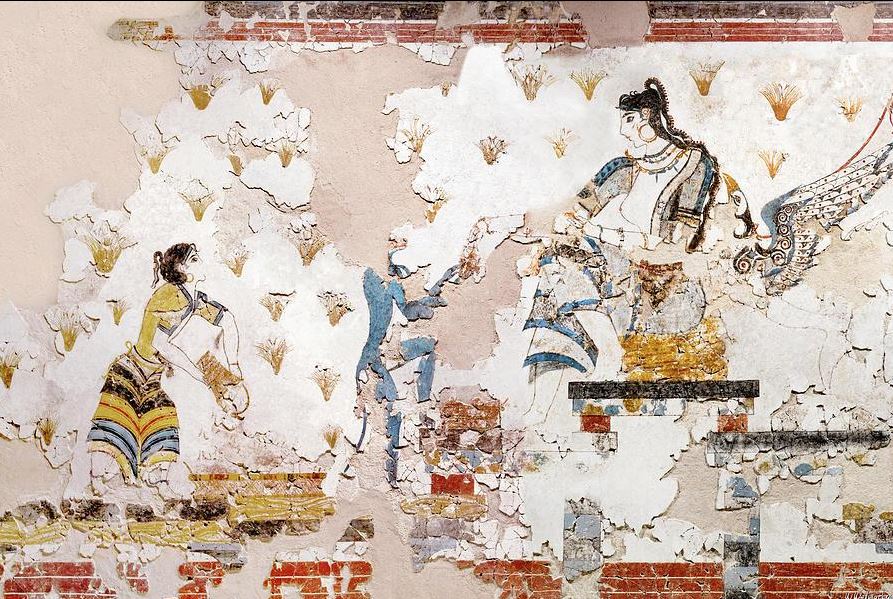
Every great civilisation has sought to answer the same question: How did a world intended for order become a world of chaos?
The names differ from one tradition to another, yet the underlying pattern is remarkably similar.
In our synthesis, Jupiter is understood not merely as the Roman sky father, but as another name for the Monad—the self-existent Source of all reality, the eternal One who brings order out of chaos. He is neither created nor born, but exists as the beginning from which all true creation proceeds.
The feminine aspect of this divine unity is Juno. She is not separate from Jupiter, but eternally one with Him, expressing wisdom, relationship, beauty and the generative power of divine love.
Juno never falls.
She remains forever within the fullness of the Monad. She is not the cause of fragmentation, but the eternal companion of divine order.
Sophia belongs to a different order of being.
In many Gnostic traditions, Sophia acts independently of the divine order. Her desire to create apart from the Monad gives rise to fragmentation and the appearance of the Demiurge. The material world becomes the stage upon which separation, suffering and ignorance unfold.
The Greek myth of Pandora tells a remarkably similar story.
By opening the sacred jar, Pandora releases suffering, disease, fear and death into the human world. Yet one gift remains behind: hope.
Seen symbolically, Sophia and Pandora fulfil similar roles. Neither is evil, nor should either be understood as a villain. Rather, each represents the mysterious possibility of freedom exercised apart from perfect order. Through their actions, the harmony of creation becomes fractured.
There is, however, an important difference.
Pandora’s story concludes with hope remaining for humanity.
Sophia’s story continues beyond the Fall. She awakens to the consequences of separation, longs for reunion with the divine, and becomes part of creation’s restoration. Her journey is one of return.
In this light, Sophia may be understood as Pandora whose story has not yet ended.
Within this synthesis, however, neither Pandora nor Sophia should be confused with Juno.
Juno is not the fallen feminine.
She is the eternal feminine.
She does not descend into chaos because she is forever united with Jupiter, the Monad. She stands as the everlasting expression of divine wisdom and love, calling all creation back towards its true origin.
The purpose of existence, therefore, is not simply to explain the Fall.
It is to reveal the Return.
The journey of humanity is a movement away from fragmentation and back towards unity; away from illusion and towards reality; away from chaos and towards the eternal order that has always existed within the Monad.
The story begins in chaos.
It ends in unity.
It ends in the eternal embrace of Jupiter and Juno, the indivisible Source from whom all true life, order and love proceed.