Article XXIV — The Denial of Appearances and the Reality of the Monarch — Anton Jayasuriya
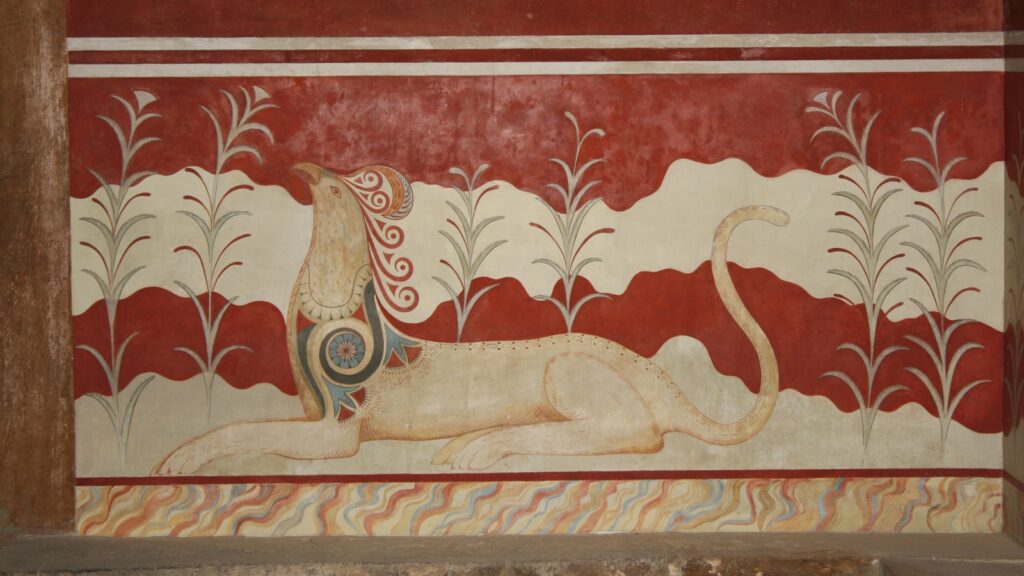
The Denial of Appearances and the Reality of the Monarch
Among the world’s mystical traditions there appears a common principle: reality belongs ultimately to that which proceeds from the Highest Principle. Whether one speaks of God, the Monad, the Good, or the Monarch, the logic remains the same. What comes from the Source shares the nature of the Source; what does not possesses only a derivative and temporary existence.
From this principle arises a spiritual discipline often described as the denial of appearances. At first glance the doctrine seems absurd. Disease appears real. Conflict appears real. Loss, grief, fear, and suffering seem undeniably present. Yet the mystics do not deny experience itself. They deny the ultimate reality of what merely appears.
A storm reflected in a mirror appears within the mirror, yet the mirror remains untouched. In the same way, chaos, fragmentation, suffering, and fear may arise within experience without revealing the deepest nature of reality itself.
Within the Jupiter–Monad synthesis, Jupiter is understood as the Monarch: the principle of order that arises from and overcomes chaos. As Monarch, Jupiter represents the source of coherence, truth, intelligibility, and unity. What proceeds from the Monarch participates in these qualities. Love, harmony, beauty, and truth are therefore real in the fullest sense because they share the nature of their source.
The question then arises: what of suffering, hatred, separation, and disease?
If these things do not share the nature of the Monarch, can they truly be said to be real?
The mystical answer is both simple and profound. They are experienced, but they are not ultimate. They possess a borrowed reality rather than an original one. They arise within the field of experience, yet they do not define the nature of existence itself.
Thus the spiritual practitioner may look upon illness and say:
“If Love did not create this, then it cannot be ultimately real.”
This statement is not a rejection of the suffering person, nor a refusal of care, compassion, or treatment. It is a refusal to grant suffering the final word concerning reality.
The danger lies in misunderstanding this principle as mere insistence. Repeating “this is not real” can become another attachment if it serves to suppress experience rather than understand it. The goal is not blindness but discernment.
The wiser approach is:
See clearly what appears.
Refuse to worship it.
Remember what is more real than it.
In this way one neither denies human experience nor becomes enslaved by it. One acknowledges pain while remembering that pain is not the deepest truth. One acknowledges fragmentation while remembering that fragmentation cannot be final if reality itself originates in unity.
The spiritual path therefore becomes an act of remembrance: the gradual withdrawal of belief from appearances and the restoration of faith in the order established by the Monarch.
Chaos may appear.
Fragmentation may appear.
Fear may appear.
Yet none of these created themselves, and none possess the permanence of that from which all true reality proceeds.
The task of the seeker is not to conquer appearances by force but to see through them. In doing so, one discovers that beneath every illusion of separation remains the same eternal foundation: the order, coherence, and love of the Monarch.
What the Monarch creates is real.
What opposes the Monarch may appear for a time.
But appearance is not reality, and reality remains unchanged.