Article XX — Jupiter and the Monad: A Roman-Gnostic Synthesis — Anton Jayasuriya
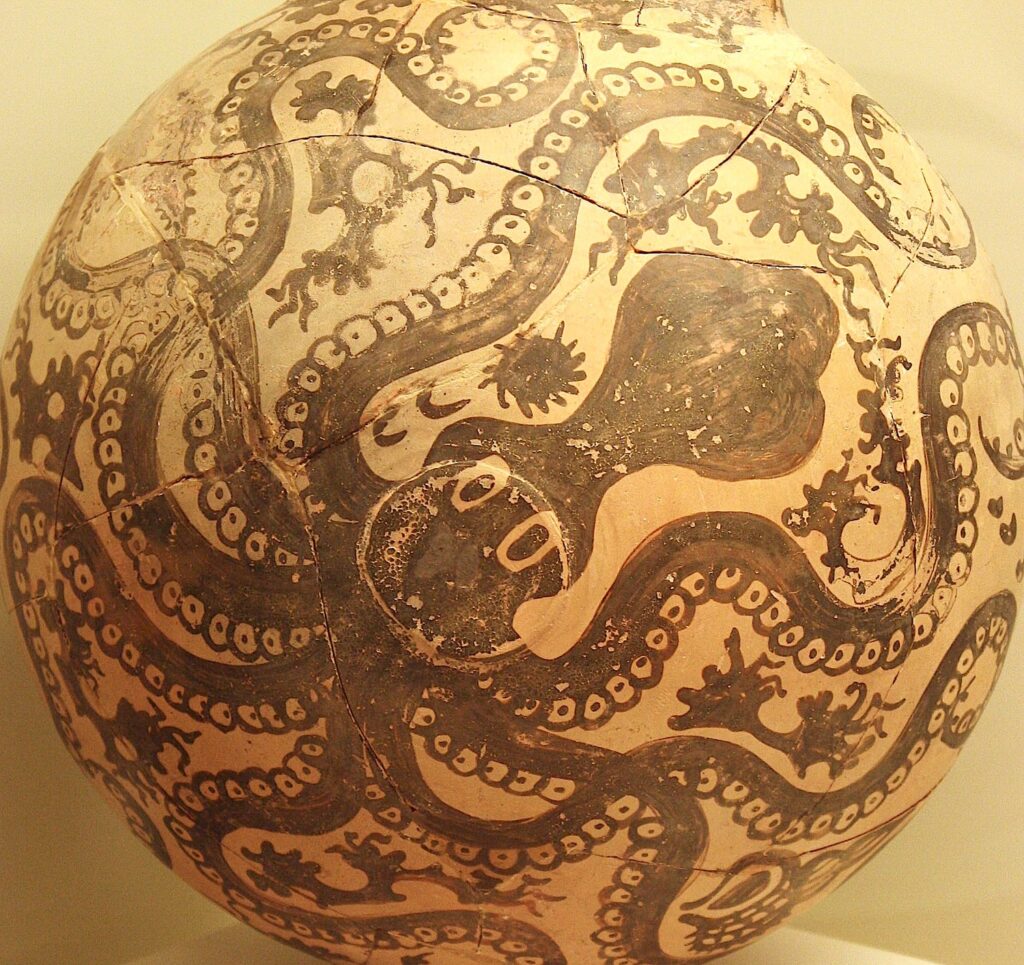
Many modern interpretations of Gnosticism identify the highest principle—the Monad—as an unknowable source beyond all names and forms. Yet the earliest Roman conception of Jupiter may offer another way of understanding this supreme reality.
In later mythology, Jupiter appears primarily as a sky father and ruler of the gods. However, some ancient traditions preserve hints of a more primordial role. Before the ordered cosmos stood Chaos: the undifferentiated condition from which the world emerged. Within our interpretation, Jupiter can be understood not merely as a god within creation, but as the principle that brings order to chaos itself.
Viewed through this lens, Jupiter resembles the Gnostic Monad. He is not simply a celestial king among lesser deities, but the originating source of cosmic law, intelligibility, and harmony. His sovereignty does not arise from conquest but from being the very ground upon which order becomes possible.
The apparent tension between Roman religion and Gnostic thought begins to dissolve. The Monad is the source from which all reality emanates; Jupiter is the principle through which chaos becomes cosmos. Both represent unity preceding multiplicity, coherence preceding fragmentation, and order preceding manifestation.
Our synthesis also reframes the traditional Gnostic hierarchy. Rather than placing Jupiter among the lower powers or archons, Jupiter becomes another name for the supreme principle itself. The various gods, aeons, and spiritual intelligences are then understood as emanations or expressions of the original ordering source.
Such a synthesis does not claim historical accuracy in a strict academic sense. Rather, it offers a philosophical bridge between two traditions. In our reading, Jupiter is not merely the ruler of heaven. He is the One from which heaven and earth derive their existence—the Roman name for the Monad, the first principle that transforms chaos into an ordered world.
This also fits surprisingly well with our transpersonal framework, because it places order versus fragmentation at the center of spirituality. Jupiter becomes not merely a mythological figure but a symbol of the movement from fragmentation back toward unity. In this understanding, the Monad is not a distant abstraction but the living principle through which coherence, truth, and relationship are continually restored.
The spiritual implication is profound: wherever order, truth, justice, and coherence emerge from confusion, the work of Jupiter—the work of the Monad—is revealed.